Tucked In or Thrown Together: What Your Homestay Bedding Is Actually Telling You
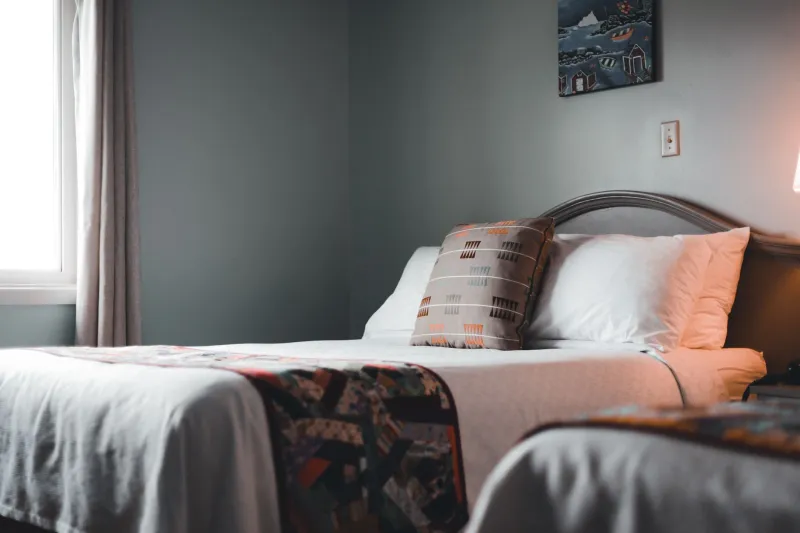
There's a moment every traveler knows. You push open the door to your homestay room, drop your bag, and fall backward onto the bed. And in that one second, you know. You just know whether this host cares.
It's not the artwork on the wall or the candle on the dresser that tips you off. It's the sheets. The weight of the comforter. The way the pillows either cradle your head or crunch underneath it. Bedding is one of those things that nobody talks about when they're reviewing a stay, but everybody feels—and it communicates more about a host's investment in your comfort than almost anything else in the room.
At Emon's Corner Homestay, we think about this stuff a lot. Because when you're staying in someone's home, not a corporate property with a housekeeping department and a linen vendor, every choice is personal. And personal choices tell a story.
The Sheet Situation
Let's start at the most basic level: the sheets themselves. Not every host needs to be running Egyptian cotton with a 600-thread count—that's not the point. What matters is whether the sheets feel considered.
Guests who've done a fair amount of homestay travel will tell you there's a big difference between a host who picked up a clearance pack of polyester sheets and called it a day, and one who found a set that's soft, breathable, and actually suited to the climate. In the South or Southwest during summer, lightweight percale sheets that don't trap heat are a signal that a host has thought about what sleeping in that room actually feels like in August. In New England or the Pacific Northwest in winter, flannel or a brushed cotton tells you the same thing from the other direction.
When a host matches their linens to the season and the region, they're essentially saying: I've slept in this room. I know what you're going to need.
Pillow Count and Configuration: More Loaded Than You'd Think
Here's something that sounds trivial until you've spent a night with one flat pillow and a stiff neck: the pillow situation matters enormously.
A host who puts out just enough pillows to technically qualify as a made bed is different from one who offers a small stack—a couple of firm options, maybe a softer one, possibly even a body pillow tucked to the side. That variety signals awareness. It says the host understands that people sleep differently and they're not going to make you choose between neck support and comfort.
Extra pillows on a shelf or in the closet, clearly labeled or just visibly available, go even further. That's a host who's anticipating needs you haven't voiced yet. And in a homestay context, that kind of quiet attentiveness is the whole point—it's what separates staying in someone's home from staying in a room that happens to be in someone's house.
The Weight of the Comforter
Seasonally appropriate bedding is one thing, but the weight and loft of a comforter or duvet is its own conversation. A heavy, overstuffed comforter in a room with no air conditioning in July is a rough night waiting to happen. A thin blanket in a drafty old farmhouse in November is equally miserable.
But there's a thoughtful middle ground that good hosts find: a main layer that works for most guests, plus a folded blanket at the foot of the bed. That extra blanket is a small gesture, but it's a meaningful one. It says: I don't know exactly how you sleep, but I've covered my bases. It's the textile equivalent of leaving a note that says "help yourself."
Down versus down alternative is another layer to this. Some guests have allergies. Some have ethical preferences around animal products. Hosts who use hypoallergenic fills—and mention it in their listing or welcome info—are showing a level of care that goes beyond the basics. You might not think to check for this before arrival, but you'll notice it if you're the kind of traveler who wakes up sneezing.
The Details That Add Up
Beyond the main components, it's the finishing details that separate a thoughtful bed from a forgettable one.
Are the pillow protectors clean and intact, or are they yellowed and crinkly? Is the fitted sheet actually fitted—staying on the corners through the night—or does it pop off every time you roll over? Is there a top sheet for guests who prefer that layer, or has the host gone duvet-only without considering that some people genuinely need that option?
These aren't luxury concerns. They're comfort basics, and they reveal whether a host has tested their own setup or just assembled it once and moved on.
Scent is part of this too. Sheets that smell faintly of lavender or just clean, line-dried fabric set a tone before you've even closed your eyes. Sheets that carry a musty or chemical smell from improper storage do the opposite—and that's a hard first impression to shake.
What Guests Can Actually Do With This Information
So you're browsing listings, trying to decide where to stay. What do you do with all of this?
First, look at photos carefully. A well-made bed in a listing photo isn't just staging—it's a data point. A host who put effort into presenting their bedding for photos probably puts effort into maintaining it for guests. Conversely, a lumpy, poorly-photographed bed in the listing is unlikely to improve in person.
Second, don't be shy about asking. Reaching out to a host before booking to ask about bedding—especially if you have specific needs like allergy-friendly materials or a preference for firm versus soft pillows—is completely reasonable. A host who responds warmly and specifically to that kind of question is already showing you something about how they'll treat you once you're there.
Finally, when you arrive and find that the bed is genuinely well-appointed, say something. Hosts who invest in guest comfort don't always hear back about it. A quick mention—"I slept so well, those sheets were amazing"—costs you nothing and means a lot to someone who spent actual time and money trying to get it right.
The Bed Is the Stay
At the end of the day—literally—the quality of your sleep shapes the quality of your entire trip. A great day of exploring a new city can be undone by a bad night. And in a homestay setting, where the whole appeal is the personal, human element of the experience, the bed is where that humanity either shows up or falls flat.
The hosts who get this right aren't just providing a place to sleep. They're offering rest—real, restorative rest—as an act of hospitality. And that's worth recognizing, whether you're a guest learning to read the signs or a host wondering where to put your energy next.
Start with the bed. Everything else follows.