What's on the Plate Tells You Everything: Morning Meals and the Cultural Conversations You Didn't Expect
You could spend a week reading travel blogs, downloading audio guides, and bookmarking Instagram reels about a destination. Or you could sit down at a homestay host's kitchen table at 7:30 in the morning, wrap your hands around a mug of something you've never tasted before, and learn more in forty-five minutes than all of that research combined.
That's not an exaggeration. It's just what happens when the setting is someone's actual home, the meal is something they actually make for themselves, and the conversation has nowhere to hide behind a hotel's polished professionalism.
Breakfast, in particular, has a way of stripping everything down. Nobody's performing at breakfast. Hosts aren't in tour-guide mode yet. Guests are still a little sleepy. And in that unguarded space, something genuinely real tends to come through.
The Food Itself Is Already Talking
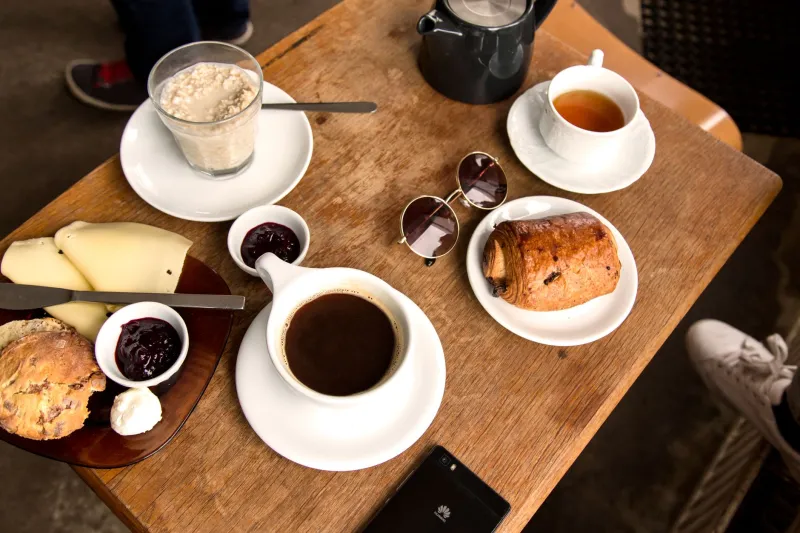
Before anyone says a word, the table is already communicating. A plate of congee with pickled vegetables in one home. Soft-boiled eggs and buttered toast in another. A stack of fresh flatbread with a bowl of spiced oil for dipping. Each of these isn't just food — it's a snapshot of what a family considers normal, nourishing, and worth starting the day with.
Travelers who stay in homestays often describe a specific moment of realization: Oh, this is just what they eat. Not a curated cultural experience. Not something prepared to impress. Just Tuesday morning.
Marcus, a traveler from Austin who stayed with a family in coastal Portugal, described sitting down to a breakfast of crusty bread, strong coffee, and a local sheep's milk cheese he couldn't name. "They ate fast, they ate the same thing every day, and they clearly loved it," he said. "I asked about the cheese and ended up getting a twenty-minute story about the village it came from and a relative who still makes it. That conversation rewired how I thought about the whole region."
That's the thing about food in someone's home. It's never just food.
The Rituals Are the Real Curriculum
Watch closely enough and the routines themselves become instructive. Who makes the coffee? Does everyone sit down together or does someone eat standing at the counter? Is the television on? Is the radio? Is there silence? What does that silence mean — comfort, habit, or something else entirely?
In many American households, breakfast is a rushed, solo activity. Everyone grabs what they need and scatters. But in other cultures, the morning meal carries a social weight that feels almost ceremonial to an outsider. Sitting down together isn't optional. Offering food before you take any yourself is the baseline expectation. Leaving the table before others finish might be considered rude.
None of this gets explained. You just pick it up by watching, and occasionally by accidentally getting it wrong.
Jennifer, who traveled solo through rural Japan and stayed in a family-run guesthouse, remembers pouring her own tea before her host had been served. "The look on my host's face wasn't mean — she just looked surprised," Jennifer recalled. "She gently poured mine out and refilled it herself, after her mother. I wanted to disappear, but I also immediately understood something about that household that no guidebook chapter had actually made click for me before."
Mistakes, it turns out, are some of the fastest teachers at the breakfast table.
Conversation at 8 AM Has a Different Quality
There's a reason people talk about the honesty of early mornings. The social filters haven't fully loaded yet. Hosts who might be more guarded in the evening, more aware of playing the role of host, tend to be a little looser at breakfast. They'll mention something about a neighbor. Complain lightly about the weather. Talk about what they're doing later in a way that makes it clear they're just a person with a regular life, not a backdrop for your vacation.
This is where guests start to understand things like family dynamics, local politics (if the conversation goes there), generational differences, or just what people in that place actually care about day to day.
Derek, traveling from Chicago through southern Mexico, described a breakfast conversation that started with eggs and ended somewhere completely different. "My host started telling me about her daughter moving to the city for work," he said. "And then her own mother had done the same thing fifty years ago, moving from a village. I was just eating my eggs and suddenly I had this whole picture of three generations of women in one family and what 'leaving home' had meant to each of them. I think about that conversation more than anything else from that trip."
That's the kind of context that a two-hour city tour simply cannot deliver.
What Polite Looks Like — And Why It Varies
One of the subtler things the breakfast table teaches is the local definition of hospitality itself. In some homestays, your host will pile food on your plate without asking and interpret your protests as false modesty. In others, taking more than your share without being explicitly offered would be considered presumptuous. Some hosts want you to feel like family, which means helping yourself and asking for the salt. Others are showing respect by serving you, and you honor that by letting them.
Learning to read which version you're in — and adjusting — is genuinely useful social intelligence. It also tends to produce a kind of empathy that's hard to manufacture any other way.
"I grew up in a household where refusing food was fine," said Priya, who stayed with a family in rural Greece while traveling from her home in New Jersey. "I said no to seconds and my host looked genuinely hurt. Not dramatically — just a little deflated. I caught it and said yes the next time she offered, and her whole face changed. It was such a small thing, but I realized I'd been carrying my own assumptions about what 'no thank you' communicates."
The Guidebook Can't Sit Across the Table From You
Travel content — this article included — can point you toward experiences and help you know what to look for. But there's a ceiling to what any of it can actually deliver. The breakfast table at a homestay operates below that ceiling, in a space that's personal, unrepeatable, and not designed for an audience.
That's what makes it stick. You weren't supposed to learn anything. You were just eating breakfast. And somewhere between the first cup of coffee and whatever they put in front of you that you'd never tried before, the place you were visiting started to make a different kind of sense.
No algorithm serves that up. No star rating captures it. It just happens when you show up, sit down, and pay attention.