What the Furniture Is Trying to Tell You: Reading a Homestay Space Before You Even Unpack
You've scrolled through the photos. You've read the reviews. You've maybe even exchanged a few messages with the host. But there's a whole other layer of information sitting right there in those listing images that most guests walk right past — the space itself.
A homestay isn't a staged hotel room with interchangeable furniture and a neutral color palette designed to offend no one. It's someone's actual home. And homes, whether their owners realize it or not, are autobiographies written in wood, fabric, and wall space. If you know how to read them, you can learn more about a host in thirty seconds of photo-scrolling than in a week of back-and-forth messages.
This works both ways, too. Hosts who understand what their spaces are communicating can make intentional choices that attract exactly the kind of guests they'll actually enjoy having around.
The Living Room Tells the Whole Story
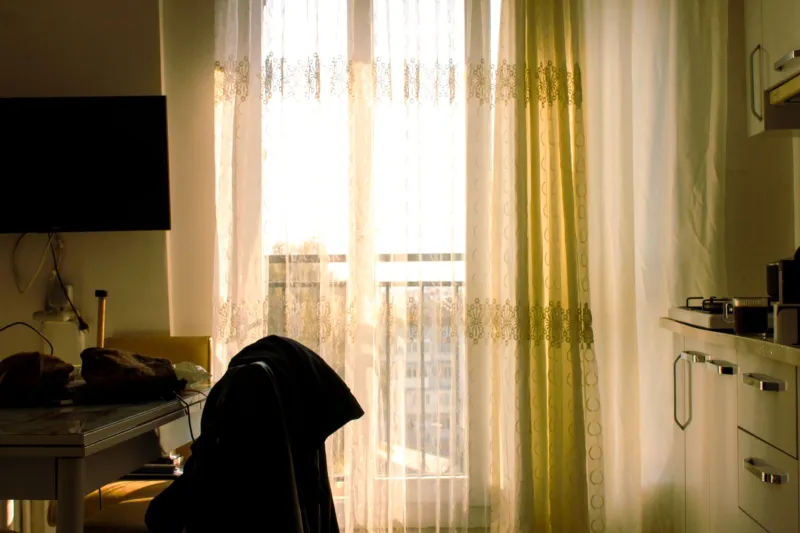
Start with the common area, if there is one. The living room — or whatever shared space the host has — is usually the most revealing room in any home.
Is the seating arranged around a television, or around a coffee table? That single detail separates the "come in, relax, but we're probably not going to talk much" household from the "pull up a chair, let's actually get to know each other" one. Hosts who genuinely love conversation tend to orient their furniture toward the center of the room, not toward a screen.
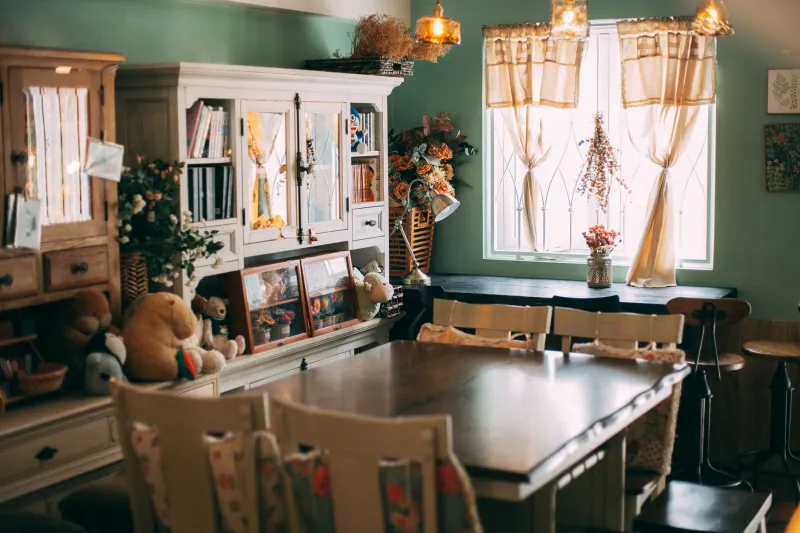
Look at the bookshelves, too. Are they filled with actual books, or are they styled with decorative objects and a few strategically placed spines? A packed, slightly chaotic bookshelf — the kind where paperbacks are stacked horizontally on top of vertical rows — usually belongs to someone who reads compulsively and will absolutely recommend three novels before you finish your first cup of coffee. That's either your dream host or your nightmare, depending on who you are.
A minimalist living room with clean lines and very little on the walls signals something different: a host who values calm, personal space, and probably won't be knocking on your door at 9 p.m. to see how your day went. Not cold — just boundaried. For independent travelers who want to be left alone, that's a feature, not a flaw.
The Kitchen as a Hospitality Indicator
If you get photos of the kitchen, pay close attention. Kitchens are where hospitality philosophies get exposed fast.
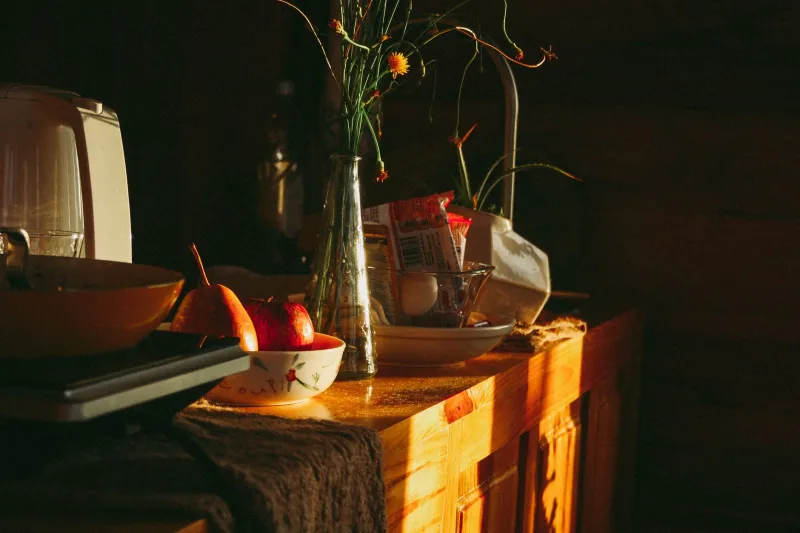
A well-worn cutting board, visible spice racks, and pots hanging from a ceiling hook say "food matters here." Hosts with kitchens like that are almost always the ones who'll offer you a taste of what they're cooking or leave a plate of something on the counter with a sticky note. You're not just renting a room — you're adjacent to someone's culinary life, and that tends to be a genuinely wonderful thing.
On the other end, an immaculate kitchen with nothing on the counters and a single dish drying rack might mean the host doesn't cook much, or simply keeps a strict separation between their space and yours. Neither is wrong. But knowing the difference helps you set your own expectations. If you were hoping for that slow-morning-coffee-with-the-host vibe, a sterile kitchen is a clue that it probably isn't coming.
Decor as a Values Statement
This is where things get genuinely interesting. The art, the objects, the little collections that accumulate on shelves over years — these aren't just aesthetic choices. They're values made visible.
A home full of travel souvenirs — a Oaxacan textile here, a hand-carved bowl from somewhere in Southeast Asia there — belongs to someone who gets it. They've been the guest. They know what it feels like to land somewhere unfamiliar and need someone to show you where the good tacos are. Hosts like this tend to be naturally empathetic because they've been on the other side of the equation.
Family photos displayed prominently signal a host who's rooted, community-oriented, and probably warm in a very practical, unpretentious way. Religious or spiritual items — a small altar, a cross above the door, a mezuzah on the frame — aren't necessarily a flag in either direction, but they do tell you something about the household's rhythm and values. If those things resonate with you, great. If they don't, it's worth thinking about whether the cultural fit is there.
And then there's the handmade stuff. Quilts, pottery, woodwork — anything clearly made by hand and displayed with care. That's almost always a host who values craft, patience, and things that take time. They're rarely in a rush. They probably have opinions about coffee and bread. They will make you feel like a person, not a transaction.
The Guest Room Itself: What Hosts Are Actually Saying
The room you'll sleep in is its own message. And the most telling thing isn't how fancy it is — it's how considered it feels.
A guest room that still has the host's old treadmill shoved in the corner and a closet full of off-season clothes is a guest room that was created out of economic necessity, not genuine desire to host. That's not always a bad stay, but you should walk in with your eyes open. You're more of a revenue stream than a welcomed presence.
Contrast that with a room where someone has clearly thought about you — a reading lamp positioned well, a few books left on the nightstand, an empty dresser with actual drawer space, a hook on the back of the door. These small, deliberate gestures are the physical equivalent of a host saying "I thought about what you might need before you got here." That's the difference between a room for rent and genuine hospitality.
Extra blankets folded at the foot of the bed? Classic caretaker host. A local map or handwritten list of recommendations on the desk? Someone who genuinely wants your trip to go well. A single sad pillow and a bare nightstand? Manage your expectations accordingly.
How Hosts Can Use This Intentionally
If you're on the hosting side of this, the takeaway is pretty straightforward: your space is already saying something. The question is whether it's saying what you want it to say.
You don't need to redecorate. You just need to be honest with yourself about what your home communicates and whether that matches the kind of guest you actually want. If you're a homebody who loves quiet evenings and early mornings, lean into that. Style your listing photos to reflect it. The travelers who want exactly that kind of stay will find you — and they'll be the right fit.
If you want a livelier, more social dynamic, make sure your common spaces invite it. Put out the good chairs. Leave something on the coffee table worth talking about. Let the space do some of the work before the guest even arrives.
At the end of the day, a great homestay match isn't just about price and location. It's about two people — host and guest — finding each other through the quiet language of a well-lived-in space. The furniture was talking all along. You just have to learn to listen.