Reading the Room: What Your Homestay Host Is Telling You Without Saying a Word
There's a moment that happens in almost every homestay — usually sometime on the first afternoon. You're standing in the kitchen, wondering if it's okay to use the good pan, whether the coffee maker is fair game before 7 a.m., and if that stack of mail on the counter is meant to stay exactly where it is. Nobody told you any of this. And somehow, you're expected to just... know.
Here's the thing: you can know. Not through telepathy, and not by peppering your host with questions every hour. The home itself is already talking. You just have to learn how to listen.
The Entryway Always Sets the Tone
Before you've even said hello, the entryway is already giving you a rundown of house culture. A neat row of shoes by the front door? That's not decoration — that's a policy. If your host's family consistently removes their shoes at the threshold, the expectation extends to you, whether it was ever spelled out or not.
Same goes for hooks, baskets, and trays. If there's a designated spot near the door for bags, keys, and outerwear, that's a gentle system already in place. Dropping your stuff on the couch or draping your jacket over a dining chair probably isn't going to land well, even if no one says anything. Tidy entryways usually signal tidy households — and tidy households tend to care about where things live.
The Kitchen Is the Most Honest Room in the House
If you want to understand your host's preferences, spend five minutes really looking at their kitchen before you touch anything. The way someone organizes — or doesn't organize — their kitchen tells you an enormous amount about how they feel about shared space.
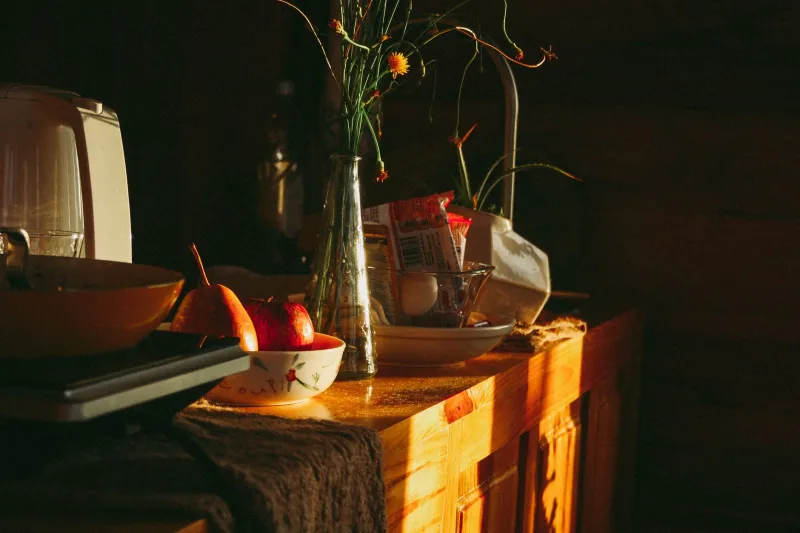
A countertop that's been wiped clean and kept completely clear? That person values an uncluttered workspace. Leaving your cutting board, a half-empty coffee mug, and yesterday's fruit peel sitting out might bother them more than they'll ever say. On the flip side, a kitchen that's warm and a little lived-in, with a fruit bowl front and center and a notepad on the fridge, usually signals a more relaxed attitude about shared use.
Pay attention to what's put away versus what's left accessible. If the blender is tucked in a cabinet and the good knives are in a block on the counter, there's a hierarchy there. The things left out are probably fine to use. The things stored away might need a conversation first.
And the dish situation — don't underestimate it. If dishes are washed immediately after use and the sink is always empty, you've got your answer on what's expected of you. If there's a small pile that gets dealt with once a day, the standard is a little more relaxed. Mirror what you see.
Thermostats, Lighting, and the Subtle Politics of Shared Comfort
This one catches a lot of guests off guard. You're cold, the thermostat is sitting at 68°F, and you figure bumping it up a couple of degrees is no big deal. Except in many households, the thermostat setting is practically sacred. It reflects utility bills, personal comfort thresholds, and sometimes long-standing household arguments that predate your arrival by years.
A good rule of thumb: if you didn't set it, don't change it without asking. Instead, layer up, ask if it's okay to adjust, or mention that you're running cold. Most hosts are happy to accommodate — they just want to be included in the decision.
Lighting follows a similar logic. If your host consistently keeps the living room dim in the evenings, or turns off lights when leaving a room, they're probably mindful of energy use. Leaving every light blazing when you step out for dinner is the kind of thing that creates quiet friction. It's small, but small things accumulate.
Shared Spaces and the Invisible Boundaries Within Them
A living room can feel wide open and still have invisible lines running through it. The chair that's clearly "their chair" — worn in, angled toward the TV just right, with a side table close enough for a drink — is probably not up for grabs, even if it's technically in a common area. Hosts rarely announce these things. You pick it up from watching where they naturally gravitate.
Same with the couch. If one end has a blanket folded on it and a book resting on the armrest, that end has an owner. Take the other cushion.
Notice, too, how your host uses shared spaces throughout the day. Do they disappear into their room after dinner and reemerge in the morning? That might mean they value quiet evenings and aren't looking for extended socializing. Do they linger in the kitchen for an hour after breakfast, coffee in hand, clearly open to conversation? That's an invitation — take it if you want to, or politely excuse yourself if you need the time.
The Rhythm of the House Is a Schedule You Should Learn
Every home runs on a rhythm, and most of that rhythm is invisible until you pay attention. Is the shower running at 6:15 every morning like clockwork? Plan around it. Does the household seem to wind down around 9:30 p.m.? Probably not the time to start a load of laundry or take a phone call in the hallway.
Weekend rhythms often differ from weekday ones. A host who's up at 6 a.m. during the week might sleep until 9 on Saturday. Clattering around the kitchen at 7 a.m. on a Sunday when the house is clearly still asleep is the kind of thing that doesn't need a rule — it just needs awareness.
If you're unsure about the rhythm, ask once, broadly: "Is there anything about your routine I should know so I don't get in the way?" Most hosts appreciate the question and will tell you everything you need to know in under two minutes.
Observation Is a Form of Respect
The travelers who have the best homestay experiences aren't necessarily the most charming or the most outgoing. They're the ones who pay attention. They notice the little things — the way a host straightens a pillow after sitting on the couch, the way they quietly close the back door after letting in some evening air, the way they always rinse their mug before putting it in the dishwasher.
Those details aren't accidents. They're preferences, habits, and values that have been built over years. When you honor them without being asked, you're not just being polite — you're communicating something important: I see how you live, and I respect it.
That's the foundation of a genuinely good homestay. Not the amenities, not the location, not even the conversation over breakfast — though that can be wonderful too. It's the quiet, mutual understanding that builds when a guest takes the time to actually inhabit a space with care.
Your host opened their home to you. The least you can do is learn the language of it.