Green Thumbs and Good Guests: How Plant Care Became a Love Language in Homestays
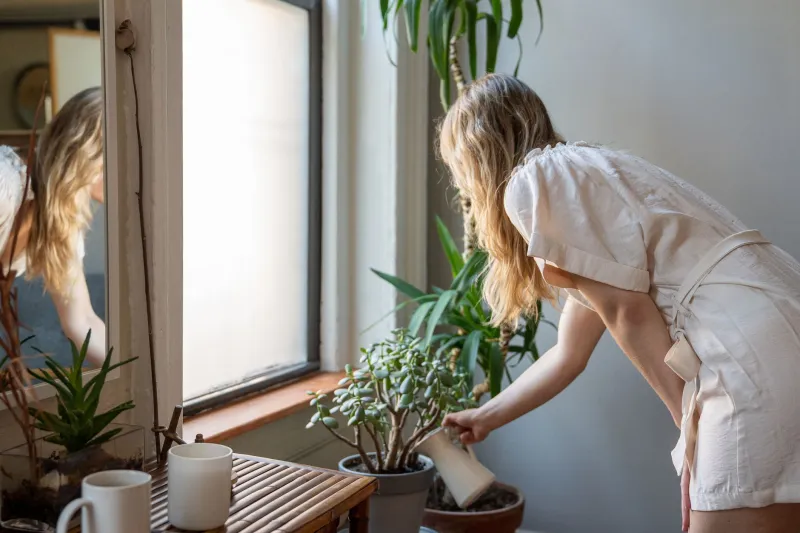
Nobody books a homestay thinking they're going to spend Tuesday morning misting a fiddle leaf fig. And yet, here we are.
There's a growing — no pun intended — phenomenon happening in spare bedrooms and sunlit living rooms across the country. Guests who arrive with a carry-on and a rough itinerary end up leaving with a propagated cutting wrapped in a damp paper towel, a standing text thread about watering schedules, and something they didn't quite expect to find: a genuine connection rooted in the smallest possible gesture.
Watering a plant.
The Moment It Starts
It usually isn't intentional. You're in the kitchen making coffee and you notice the snake plant in the corner is bone dry, soil pulling away from the pot edges. Or the hanging pothos near the guest bathroom has gone a little yellow and leggy. You don't think about it much — you just grab a glass of water.
That's it. That's how it starts.
For Marisol, a freelance designer from Austin who spent three weeks at a homestay in Asheville, North Carolina, it began with a struggling Meyer lemon tree on the back porch. "The host, Patricia, mentioned it almost apologetically when I arrived — like, 'don't worry about that thing, it's been struggling.' But I grew up with citrus trees. I couldn't just leave it."
By the end of her stay, Marisol had repotted the tree, adjusted its sun exposure, and started it on a consistent watering schedule. Patricia cried a little when she saw it looking healthier. "She said it had been her mom's tree," Marisol recalled. "I didn't know that when I started helping. But that's kind of the point, right? You just do something kind and it ends up meaning more than you expected."
Why Plants, Specifically
There's something low-stakes and deeply human about plant care. It doesn't require fluent conversation. It doesn't demand emotional vulnerability upfront. You're not sitting down to have a heart-to-heart — you're just noticing that something living needs attention and responding to it.
In the context of a homestay, that quiet reciprocity carries real weight. You're already inside someone's personal space. You've slept in their guest room, used their towels, figured out their quirky shower pressure. Tending to their plants is just another extension of inhabiting their world — and doing it thoughtfully.
Psychologists who study hospitality environments often note that shared domestic rituals — cooking together, feeding pets, maintaining small household routines — are among the fastest ways humans establish trust and warmth with strangers. Plants slot right into that category. They're living things that need consistent care, and when a guest steps up to provide that care without being asked, it signals something important: I see your home. I respect it. I'm not just passing through.
The Host's Side of the Story
For hosts, this kind of unsolicited care can be quietly disarming.
David, who has hosted travelers out of his Chicago two-flat for several years, remembers a guest named Theo who arrived for five nights and ended up spending a full afternoon helping David sort through a tangle of overgrown herb planters on the back deck. "I hadn't touched those since spring. Theo just started deadheading the basil and I came out to see what was happening and we ended up talking for three hours about, I don't know, everything — his divorce, my mom, the neighborhood, his job."
The plants were just the entry point. "There's no way that conversation starts if he doesn't pick up the pruning shears," David said.
This is the thing about homestays that's almost impossible to quantify on a listing page: the way ordinary domestic moments create openings for real human exchange. A hotel room keeps you sealed off. A homestay — when it's working the way it's supposed to — puts you in the middle of someone's actual life. And sometimes that means noticing the droopy succulent on the windowsill and doing something about it.
Cuttings as Keepsakes
One of the more charming side effects of this whole phenomenon is what guests take with them when they leave.
Not souvenirs from a gift shop. Not a branded tote bag. A propagated cutting from the host's monstera, wrapped in a damp paper towel and tucked into a zip-lock bag with a handwritten note about light and watering frequency.
Jenna, who stayed at a homestay outside Portland, Oregon, left with three cuttings from her host's extensive collection of trailing plants. That was two years ago. "I have all three of them in my apartment in Denver. They're thriving. Every time I look at them I think about that stay — the conversations we had, the neighborhood walks, the way the house smelled in the morning."
She and her host still text occasionally. Usually about the plants.
There's something quietly beautiful about that. The guest becomes a kind of steward, carrying a piece of the host's home into their own life. The plant becomes a living souvenir — one that requires ongoing attention and, in that way, keeps the connection alive long after checkout.
What This Says About the Homestay Difference
At its core, this whole plant-care phenomenon is just a very specific illustration of something broader: homestays are reciprocal in ways that other forms of lodging simply aren't.
When you stay in a hotel, the relationship is purely transactional. You pay, they provide. Nobody expects you to notice the ficus in the lobby is overwatered. Nobody would want you to.
But in a homestay, you're a temporary participant in someone's domestic life. The lines between guest and caretaker get pleasantly blurry. You might take in the mail. You might feed the cat. You might water the tomatoes because it rained last week and the host forgot to adjust the drip timer.
And in doing those things, you stop being a stranger and start being something harder to name — part guest, part neighbor, part temporary family.
That's not something any algorithm can optimize for. It's not a feature you can list in an amenities column. It just happens, quietly, in the space between arrival and departure, when someone notices a thirsty plant and decides to do something about it.
A Small Act That Grows Into Something More
If you're heading into a homestay soon, keep your eyes open. Not for what's wrong with the space, but for what needs tending. The droopy fern. The succulents that haven't been rotated in months. The herb garden that could use a good trim.
You don't have to become a plant expert. You just have to pay attention — which, honestly, is the same skill that makes anyone a good guest in the first place.
And who knows. You might leave with a cutting. You might leave with a friendship. You might leave with both, wrapped in a damp paper towel, ready to root somewhere new.