Every House Has Its Own Grammar: Learning to Speak Homestay Without Words
There's a moment — usually around day two — when something clicks inside a homestay. You stop second-guessing whether it's okay to grab a glass of water without asking. You know which burner on the stove the host actually uses, and which one they pretend doesn't exist. You've figured out, without a single conversation about it, that the TV remote lives on the left armrest of the couch and not the coffee table, and that moving it creates a low-grade disturbance in the household atmosphere.
Nobody told you any of this. You just learned it.
That's the unspoken contract of homestay travel — and honestly, it's one of the most fascinating parts of the whole thing. Every household runs on its own internal logic, a kind of domestic grammar with rules that are rarely spoken aloud but are felt immediately when broken. Learning to read that grammar quickly, and adapt to it without making a production of it, is what separates guests who settle in easily from guests who always feel slightly out of place.
The Morning Tells You Everything
If you want to understand how a household works, pay attention to the first hour of the day. Mornings are when people operate on pure habit — no performance, no hosting instincts switched on. Just the unfiltered routine.
Does the coffee get started before anyone speaks? That's a house that values quiet mornings. Is the kitchen immediately full of noise, movement, and the smell of something on the stove? You're in a home where the morning is communal and loud, and jumping in is welcome. Does the host disappear into a back room for thirty minutes before surfacing? That's a signal to give them their space before attempting any kind of conversation.
None of this will be explained to you in a welcome message. But it's all right there if you're paying attention. The morning rhythm is basically the host's personality expressed in domestic form, and reading it correctly sets the tone for everything that follows.
Shoes, Doors, and the Sacred Entryway
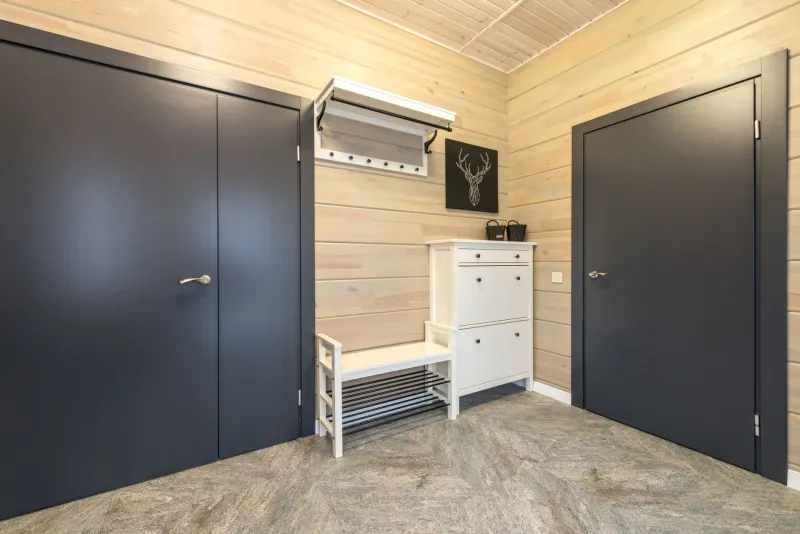
Few things reveal a household's culture faster than what happens at the front door. In a lot of American homes — especially those with hosts who grew up in Asian, Middle Eastern, or Eastern European households — shoes come off the second you step inside. There's usually a mat, a rack, or just a tidy cluster of footwear near the entrance that makes the expectation obvious without anyone having to say a word.
In other homes, shoes stay on and nobody thinks twice about it. The tell there is usually the floors — hardwood with no visible rug by the door, or a host who walks right past you in their sneakers without a second glance.
Getting this wrong isn't catastrophic, but getting it right early sends a message. It says: I'm paying attention. I respect how you run your space. That's a powerful thing to communicate without opening your mouth.
The entryway is also where you'll often find the first signs of what the house values — family photos, a key hook that's been used so long the paint is worn around it, a small table with a bowl where everyone deposits random objects. These are artifacts of a lived-in life, and they're worth noticing.
The Rhythm of Shared Rooms
Living rooms and kitchens are where the real negotiation happens in a homestay. These are shared spaces with invisible choreography, and you're stepping into a dance that's been rehearsed for years without you.
Who sits where? In most households, there's a default seating arrangement that nobody acknowledges but everyone respects. The host's chair is almost always obvious — it's the one angled toward the TV, or the one with the slight indentation in the cushion, or the one closest to the lamp. Sitting in it by accident once is understandable. Doing it twice means you missed the signal.
Kitchens have their own layered logic. Where things are stored, what's considered communal versus personal, whether the host minds you rummaging through cabinets or prefers you ask — all of this gets communicated through behavior, not briefings. A host who puts out a small basket of snacks with a casual "help yourself" wave has told you everything. A host who keeps their shelves tidy and organized but hasn't mentioned anything either way? Ask before you open the fridge.
Silence Isn't Awkward — It's Information
One of the trickier adjustments for American travelers in particular is recalibrating the relationship with silence. In a lot of US social contexts, a quiet room feels like a problem to be solved — someone needs to fill it. But in a homestay, silence often just means everyone's comfortable.
If your host goes quiet after dinner and picks up a book, that's not a sign the evening went badly. It's an invitation to exist in the same space without performing sociability. Some of the best homestay moments happen in these stretches — two people in a living room, each doing their own thing, in a kind of easy domestic parallel that you'd normally only share with people you've known for years.
Learning to read the difference between a silence that wants company and a silence that wants space is genuinely useful. The host who glances up from their book with a small smile is open to conversation. The one who's fully absorbed and hasn't looked up in twenty minutes is telling you something too.
Why Adaptation Feels So Good
Here's what's interesting about all of this: the process of learning a household's unwritten rules is actually enjoyable, once you stop fighting it. There's something almost game-like about picking up on cues, adjusting your behavior, and feeling the subtle shift when you get it right — when the host relaxes around you, when the morning feels easy instead of tentative, when you stop being a guest and start being something closer to a temporary resident.
This is the part of homestay travel that no algorithm captures and no hotel can replicate. You're not just sleeping in a building. You're temporarily inhabiting someone's world, learning the particular logic of how they've arranged their life, and finding your place inside it without disrupting the whole structure.
It takes a little patience and a lot of observation. But when it works — when you've cracked the code of the house and the stay stops feeling like a performance — it's one of the most genuinely human experiences travel has to offer.
And honestly? That's the whole point of staying somewhere real.