Cold Feet, Warm Hosts: Surviving the Thermostat Standoff in a Homestay

Let's be honest. You didn't expect the biggest challenge of your homestay to be the temperature. You anticipated maybe some awkward breakfast silences or figuring out the shower pressure. But here you are at midnight, lying on top of the covers, staring at the ceiling fan that is absolutely not spinning fast enough, wondering if it's rude to just... crack the window.
Welcome to one of the most universal and undertalked realities of staying in someone else's home. The thermostat isn't just a device. It's a declaration of values.
Why Temperature Is So Personal (And So Loaded)
Here's the thing about body temperature preferences — they're not random quirks. They're shaped by where you grew up, what your body is used to, your age, your health, and honestly, how high your utility bill was last month. A host who grew up in Phoenix has a completely different baseline than a guest arriving from Seattle in July. Someone managing arthritis runs warmer. Someone fresh off a red-eye from the northeast might be used to cranking the heat the moment October hits.
In a hotel, this is a non-issue. You've got your own room, your own thermostat, your own climate kingdom. In a homestay, you're sharing the atmosphere — literally. And that changes everything.
The good news? How you handle this tiny friction point can actually become one of the more memorable parts of your stay. Seriously.
The Art of the Diplomatic Ask
First rule: don't suffer in silence and then leave a passive-aggressive review. That helps nobody.
If you're too warm or too cold, just say something — but say it right. There's a big difference between "It's way too hot in here" and "I tend to run a little warm at night. Is there anything I can do to get a bit more airflow in my room?" The second version puts the agency on you, not the host's choices. It's collaborative rather than critical.
Most hosts genuinely want you to be comfortable. They're not trying to slow-roast you or turn you into a human popsicle. They just default to what feels normal to them, and unless you say something, they have no idea you're suffering three doors down.
A good opener: "Hey, I wanted to ask — I'm still adjusting to the temperature here. Would it be okay if I kept my window open at night, or would that cause any issues?" Simple, polite, and it opens the door (pun intended) to a real conversation.
The Blanket Strategy: Your Secret Weapon
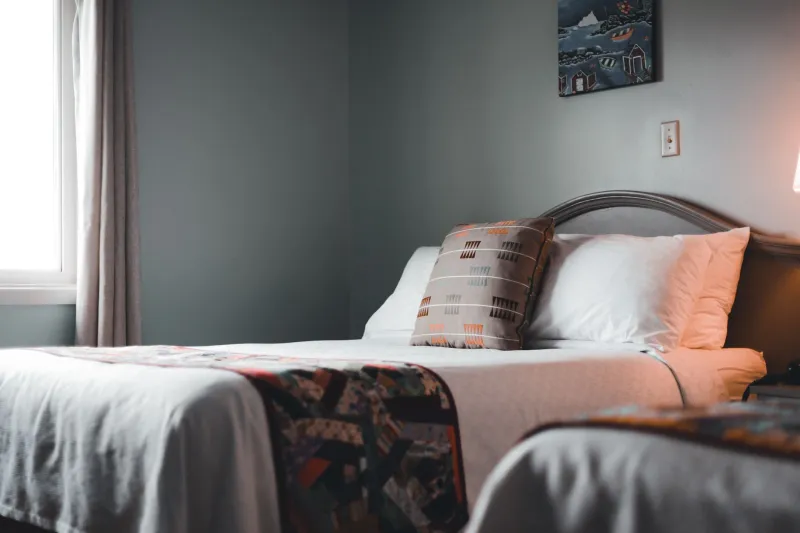
Before you even have that conversation, do a quick audit of your room. Most homestay hosts who've had a few guests will have already thought about this. Check the closet. Check under the bed. Check that mysterious wooden chest at the foot of the mattress. Extra blankets and a box fan are often hiding in plain sight.
If you're cold and there's nothing obvious, it's completely fine to ask for an extra layer. "Do you happen to have a spare blanket I could use?" is about as low-stakes a request as it gets. Hosts hear it all the time.
If you're hot, your toolkit is a little more creative. A small personal fan is genuinely one of the best things you can pack for a homestay trip — it weighs almost nothing and gives you control without touching anything in the house. A cooling towel, light sleepwear, and staying hydrated before bed also go a long way when you don't want to make it a whole thing.
The Window Negotiation
Opening a window feels like it should be simple. It is not always simple.
Some hosts have security concerns. Some have allergies and keep windows closed during high pollen season. Some have outdoor cats that will absolutely exploit any gap you leave. Some live near a street that gets rowdy after 11 PM.
So before you slide that window open and fall asleep, just ask. "Would it be alright if I opened the window in my room overnight?" takes about four seconds and can save you from a very awkward morning conversation about why the neighbor's cat was found on your pillow.
If the answer is no, ask if there's a fan available. If not, that personal fan you packed (see above) is about to justify its entire existence.
When the Negotiation Turns Into a Conversation
Here's the unexpected upside of all this thermostat diplomacy: it often leads somewhere genuinely interesting.
A guest asking about the temperature opens a door — and hosts frequently walk right through it. You might hear about why the house is always kept at 68°F (the host's grandmother swore it was the only temperature for good sleep). You might learn that the host grew up without central air and still finds it strange to rely on it. You might end up in a twenty-minute conversation about regional climate differences across the US, how heating costs have changed over the years, or why the guest room faces south and gets brutal afternoon sun in summer.
These are not deep conversations in the grand sense. But they're real ones. And real conversations are exactly what separates a homestay from a hotel.
At Emon's Corner Homestay, that's kind of the whole point. The small frictions — the thermostat, the shower schedule, the question of whether you can open a window — are actually the entry points to the kind of genuine connection that you just don't get when you hand over a key card and go your separate ways.
A Few Practical Ground Rules Worth Knowing
- Ask before adjusting. Never touch a shared thermostat without checking first. It affects the whole house, not just your room.
- Pack for temperature flexibility. Layers, a light travel fan, and breathable sleepwear give you options regardless of what the house is set to.
- Timing matters. Bring up comfort concerns early — ideally the first morning — not at the end of a miserable week.
- Be specific. "I slept a little warm last night" is more useful than "I was uncomfortable." It gives the host something to work with.
- Accept that you might just adapt. Sometimes the house temperature becomes background noise by night three. Your body adjusts more than you'd expect.
The Bottom Line
The thermostat standoff is real, it's common, and it's almost always solvable. What makes it memorable — in a good way — is how you handle it. A little honesty, a little flexibility, and a willingness to have an actual conversation can turn a minor inconvenience into one of those small, warm moments that you end up telling people about later.
Which, honestly, is exactly what a good homestay is supposed to do.