The Things You Carry Home That Never Fit in a Suitcase
At some point on every trip, you find yourself in a shop buying something you don't need. A keychain shaped like something regional. A locally branded hot sauce you'll use twice. A piece of fabric that seemed meaningful in the moment and will spend three years in a drawer. This is the souvenir economy, and it runs on the vague desire to bring something tangible back from an experience that was fundamentally intangible.
Homestay guests still buy the occasional trinket. But ask them what they actually took home from a stay—really took home, the stuff that changed something—and the list looks completely different.
The Recipe You'll Actually Make
This one comes up constantly. A host makes something for dinner. You watch, or you help, or you just eat it and ask a question. A week later you're back in your own kitchen in Chicago or Portland or wherever, and you're attempting the same dish with whatever approximation of ingredients you can find at the grocery store.
The recipe isn't really the point. The point is that you now have a different relationship with cooking—or at least with that one dish. It's connected to a person, a place, a specific evening. That context is what makes it stick in a way that a cooking class at a resort never quite does, because cooking classes are performances. Watching your host make dinner is just... life.
Some guests come home with actual handwritten recipe cards. Others reconstruct from memory. Either way, the dish carries the stay with it in a way that no magnet ever could.
The Confidence That Comes From Figuring It Out
Here's something that doesn't get talked about enough: the low-grade but genuine confidence boost that comes from successfully navigating an unfamiliar household on its own terms.
In a hotel, everything is standardized for your convenience. Nothing is asked of you. You don't have to figure anything out because everything has been pre-figured. That's comfortable, but it doesn't build anything.
In a homestay, you figure things out constantly. Where does this go? When is too early? Is it okay to use that? You read the room, you adjust, you occasionally get it wrong and course-correct. By the end of even a short stay, you've been quietly practicing a kind of social navigation that transfers to the rest of your life in ways that are hard to trace but easy to feel.
Guests who were anxious about the homestay format before they tried it almost universally report feeling more at ease in unfamiliar situations afterward. That's not a coincidence. You practiced. You just didn't realize you were practicing.
A Completely Rearranged Sense of What's Normal
Spend a week inside someone else's daily routine and your understanding of what counts as a normal life gets quietly scrambled—in the best way.
Maybe your host wakes up at 5 AM and spends an hour in the garden before anything else happens. Maybe they eat dinner at 8 PM and the whole family sits together for ninety minutes without phones. Maybe they have no dishwasher and don't seem to miss it. Maybe they keep their front door unlocked because the neighborhood works that way.
None of these things are revelations on their own. But they accumulate. And somewhere in the accumulation, you start questioning assumptions about your own life that you didn't even know were assumptions. Why do I eat lunch at my desk? Why don't I know my neighbors' names? Why does my morning feel like a race I'm already losing?
The homestay doesn't answer those questions. But it creates the conditions for asking them, which is more than most vacations ever manage.
The Friendship That Doesn't Have a Category
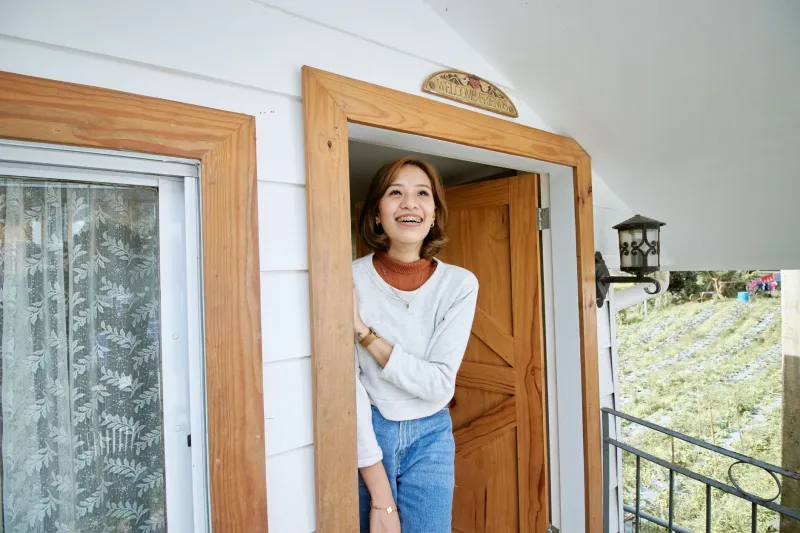
Homestay relationships are genuinely hard to classify. Your host isn't a friend in the usual sense—you didn't meet organically, the dynamic has an inherent power imbalance, and you're sharing space under circumstances that are partly commercial. But they're also not a stranger. By the end of a week, you've eaten together, navigated a few awkward moments, probably had at least one real conversation, and learned each other's habits in the intimate way that only shared space allows.
What guests often take home is a connection that doesn't fit any existing social category—and that's actually kind of valuable. It's proof that meaningful relationships don't require the usual scaffolding. You can know someone in a real way across a pretty significant gap of context, background, and expectation. That's a lesson that applies well beyond travel.
Many guests stay in touch. Some return. Some send cards at the holidays. Some just hold the memory quietly without maintaining the relationship, and that's fine too. The connection happened. It was real. That's the souvenir.
The Habit You Didn't Expect to Adopt
This one is almost always funny in retrospect. You spend a week somewhere and you come home doing something you never did before, usually something small and domestic.
You start leaving your shoes by the door because that's what the household did. You start making your bed differently. You develop an opinion about tea that you definitely didn't have before. You start saying a phrase you picked up from your host without even noticing, until someone asks you about it.
These tiny behavioral imports are the least glamorous souvenirs imaginable. They're also, in some ways, the most honest record of what the trip actually did to you. The keychain represents where you were. The habit represents how the place got inside you.
What This Means for How You Travel
For guests who've done a homestay even once, the contrast with conventional tourism tends to be jarring. Not in a way that makes traditional travel feel bad, exactly, but in a way that makes the gift shop feel a little hollow. You know what it's like to bring something real home. The fridge magnet doesn't quite cut it anymore.
That's the thing about intangible souvenirs—once you know they exist, you start traveling differently. You start looking for experiences that will leave a mark instead of experiences that will leave a photo. You start choosing depth over coverage, presence over efficiency.
You start, in other words, to travel the way the best homestay guests travel: with your eyes open to the ordinary, your assumptions loosened up, and your suitcase deliberately left with a little room for the things that don't weigh anything at all.