They Needed a Reset. They Found It in Someone Else's Kitchen.

The classic American sabbatical has a pretty recognizable shape. You book something with a pool. You fly somewhere warm. You read three books you've been meaning to read for two years, drink too many frozen drinks, and come home feeling vaguely better but not fundamentally different. Two weeks later, you're back in the same patterns that made you need the break in the first place.
A different kind of reset is gaining traction, and it looks nothing like a resort brochure.
More Americans—professionals burning out in their forties, retirees suddenly unmoored by too much unstructured time, people rebuilding after a divorce or a layoff or a health scare—are choosing to spend a month or more living inside someone else's home. Not a vacation rental. Not an Airbnb where you pretend you have the whole place to yourself. A real homestay, where the host is present, the mornings are shared, and the ordinary rhythms of someone else's daily life become the unexpected structure you didn't know you needed.
Why a Resort Can't Give You What You're Actually Looking For
Resort culture is built around removal. You're extracted from your real life and deposited into a curated environment where nothing is asked of you and everything is handled. That's genuinely useful for some kinds of exhaustion. But it doesn't work for the deeper stuff—the burnout that's really an identity question, the retirement that feels less like freedom and more like falling off a cliff, the post-divorce stillness that a swim-up bar cannot fix.
What those transitions actually require is structure, purpose, and the low-grade sense that you matter to someone. And those are things a homestay can offer that a five-star resort fundamentally cannot.
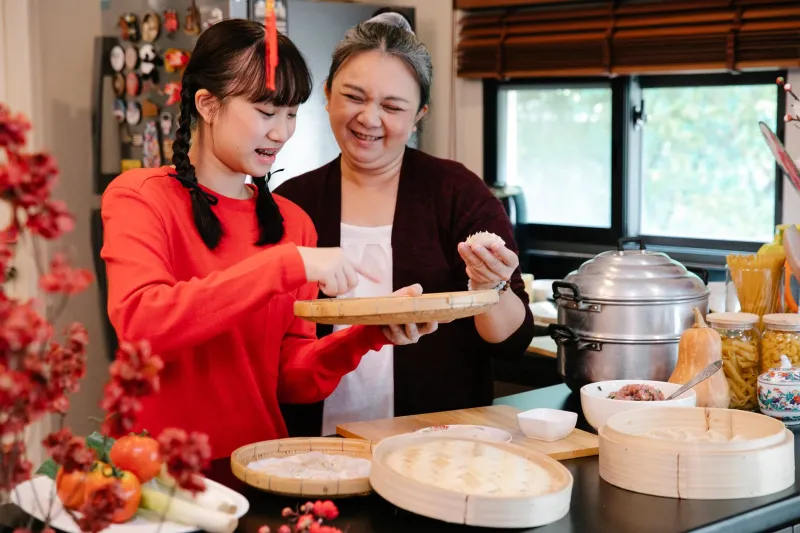
When you're living in someone's home—sharing meals, navigating the household's rhythms, occasionally helping with something because you happened to be there—you're not removed from life. You're inserted into a different version of it. And that turns out to be far more restorative for a certain kind of traveler.
The People Making This Shift
Take Marcus, a 47-year-old project manager from Austin who took a three-month leave after his company restructured. He'd planned to spend it traveling through Southeast Asia, hitting highlights and keeping things loose. Instead, a friend's recommendation landed him in a homestay in central Portugal for six weeks.
"I thought I'd be bored out of my mind by week two," he said. "Instead, I was helping the host's father-in-law repair a fence, learning to make his wife's soup, and having the most honest conversations about work and meaning I'd had in years. I came home with a completely different sense of what I actually want."
Or consider Diane, 63, who retired from a thirty-year nursing career in Ohio and found herself completely unmoored within three months. She'd done the cruise. She'd done the Florida trip. Nothing stuck. On a whim, she booked a six-week homestay in New Mexico with a host family that ran a small pottery studio.
"I wasn't a guest. I was just... there. I helped with things, I learned things, I cooked dinner twice a week. I felt useful again. That was the piece I hadn't realized I was missing."
The Unexpected Mentorship Factor
One of the stranger and more consistent things that long-stay homestay guests report is the emergence of an unexpected mentorship dynamic. Not formal, not transactional—just the natural result of spending extended time with someone who has lived differently than you.
Hosts who've built something—a business, a craft, a community, a life with genuine roots—tend to share that knowledge in the way people share anything when they're comfortable: casually, in passing, without making a big deal of it. And guests who are in a transitional moment in their own lives are often unusually receptive to exactly that kind of oblique wisdom.
It's not therapy. It's not coaching. It's closer to what used to happen when extended families lived near each other and you absorbed your uncle's philosophy on work or your grandmother's approach to conflict without ever sitting down for a formal conversation about it. Homestay long-stays recreate that dynamic in a way that's almost impossible to engineer deliberately.
What a Month Actually Does That a Week Can't
The first week of any homestay is mostly adjustment. You're learning the rhythms, figuring out the unspoken rules, calibrating how much space you take up and how much you give. You're still a guest in the formal sense.
Something shifts around day ten or twelve. The host stops explaining where things are because you already know. You start anticipating the household's patterns instead of reacting to them. You begin to feel less like a visitor and more like a temporary resident—which is a fundamentally different psychological experience.
By the end of a month, most long-stay guests report a kind of quiet confidence that's hard to describe but easy to recognize. They've navigated an unfamiliar world on its own terms. They've built something—a relationship, a routine, a small corner of competence in a place that wasn't theirs. That's not a vacation feeling. That's a growth feeling.
The Practical Side Nobody Talks About
Long-stay homestays also make financial sense in a way that resorts don't. A month in someone's home—real meals included, a real room, a real neighborhood—often costs less than a week at a mid-range resort. For people navigating a career gap or a retirement budget, that math matters.
Beyond cost, there's the question of sustainability. A month at a resort is an endurance event disguised as a vacation. A month in a homestay is a life, just a different one. That's easier on the body, the budget, and—it turns out—the soul.
Coming Home Different
What's notable about the Americans making this shift is that they're not coming home with stories about the best beach they found or the coolest restaurant they ate at. They're coming home with something harder to photograph and easier to carry.
A new way of thinking about time. A skill picked up by osmosis. A friendship with someone who lives completely differently than they do. A quieter sense of what actually matters.
The resort sabbatical gives you a break from your life. The homestay sabbatical gives you a different perspective on it. And for a lot of people navigating the genuinely hard transitions—the burnout, the retirement cliff, the post-crisis rebuild—that perspective is the thing they needed most and didn't know they could find by simply staying in someone else's home for a while.