We Got Tired of Renting Boxes: Why American Travelers Are Choosing Real Homes Over Curated Stays
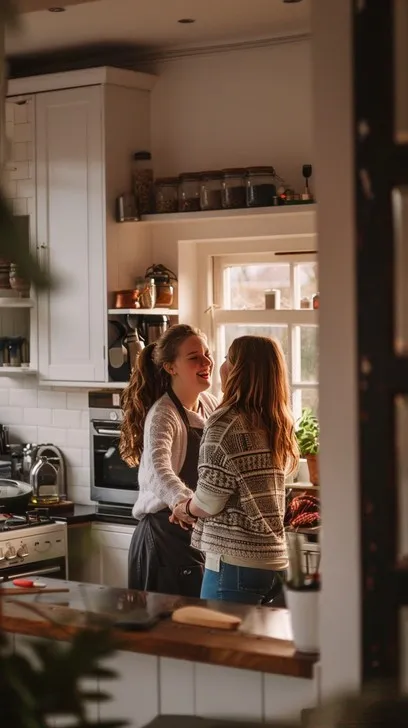
Photo: traveler having warm conversation with host in cozy home kitchen, via images.stockcake.com
Let me paint you a picture. You've just arrived at your short-term rental after a long flight. The lockbox code works. The Wi-Fi password is on a laminated card. There's a ring light in the corner for content creators, a chalkboard sign that says Welcome, Traveler! in someone's best attempt at rustic handwriting, and a refrigerator that contains exactly nothing.
Everything is technically fine. Everything is also completely hollow.
This is the experience that's quietly pushing a wave of American travelers toward something they hadn't seriously considered before: staying in someone's actual home, with an actual person, in a space that smells like real life and not staging spray.
The Convenience Trap
For a long time, the pitch from big rental platforms was simple: maximum flexibility, minimum friction. You don't have to talk to anyone. You can check in at 2 AM. The photos are professional. The reviews are plentiful.
And for a while, it worked. Travelers who'd grown up booking hotels appreciated the extra space and the kitchen access. The early days of platforms like Airbnb felt genuinely exciting — you were staying somewhere local, even if the host was rarely there.
But the model evolved. Hosts became investors. Apartments became inventory. The "local experience" got replaced by a standardized aesthetic that looks identical whether you're in Nashville, Portland, or Scottsdale. Somewhere along the way, the friction that got removed was the human part.
And now, a lot of people miss it.
What Younger Travelers Are Actually Looking For
It would be easy to frame this as a millennial nostalgia thing, but the data and the conversations don't really support that. Younger travelers in their 20s — people who grew up with apps and algorithmic matching — are among the most vocal about wanting something different.
The word that comes up constantly is known. They want to feel known somewhere. Not recognized by a loyalty program. Not greeted by a notification. Actually known — by a person who remembers that they mentioned they were visiting for a cousin's wedding, or who sets out an extra towel because they noticed you tend to shower at night.
That kind of attention can't be automated. It's not a feature you can add to a platform. It's just what happens when a real person hosts you with genuine care, and it's exactly what the short-term rental market stripped out in its race toward scale.
Homestays offer that. Not always perfectly, not always smoothly — but authentically. And authenticity, it turns out, is something people will actually pay for and travel toward.
The Older Demographic Isn't Immune Either
On the other end of the age spectrum, travelers in their 50s and 60s are coming to homestays from a completely different direction. Many of them remember staying with family friends on road trips, or doing home exchanges before that was even a formalized concept. For them, the homestay isn't novel — it's a return.
What's driving them back is partly fatigue with the hotel experience (which has gotten more expensive and less personal over time) and partly a genuine desire for connection that becomes more important, not less, as people get older. Traveling alone gets lonelier when your accommodations offer zero human contact. A host who invites you to sit on the porch for a bit after dinner is worth more than a concierge who hands you a city map.
There's also a practical dimension. Homestay guests often get access to a level of local knowledge that no app replicates — the diner that doesn't have a website, the back road that cuts twenty minutes off the drive to the state park, the neighborhood farmer's market that runs only on alternating Saturdays. That kind of intel is genuinely valuable, and it flows naturally from conversation with someone who actually lives there.
The Exhaustion of Curated Travel
Something else is happening in the broader culture that's worth naming directly: people are getting exhausted by experiences that feel designed to be photographed rather than felt.
The influencer economy turned travel into content, and content requires sets. Perfectly lit rental kitchens. Artfully rumpled linen. A neon sign on the wall that says something aspirational. The whole thing starts to feel like you're a prop in someone else's brand shoot, even when it's your own vacation.
Homestays, almost by definition, resist that. Nobody's grandmother's house was designed for Instagram. The couch in the common area is comfortable, not photogenic. The backyard has a lawn mower in it. The bathroom has a collection of half-used shampoo bottles that tell a whole story about a real person's life.
And travelers — more and more of them — are finding that deeply, unexpectedly refreshing.
What Algorithms Can't Give You
Here's the thing about spontaneous moments: they can't be predicted, packaged, or recommended by a matching engine. The host who ends up driving you to the bus station because your rideshare fell through. The impromptu dinner invitation because they made too much chili. The conversation at the kitchen table that runs two hours longer than either of you planned and leaves you with a completely different perspective on the city you're visiting.
These things happen in homestays. They don't happen in staged rentals, and they definitely don't happen in hotel corridors.
The shift we're seeing in American travel isn't really about rejecting convenience — it's about recognizing that some kinds of richness require a little friction, a little uncertainty, a little willingness to share space with another human being and see what comes of it.
For the travelers who are ready to make that trade, the homestay is waiting. And it's a better deal than any algorithm is going to find you.